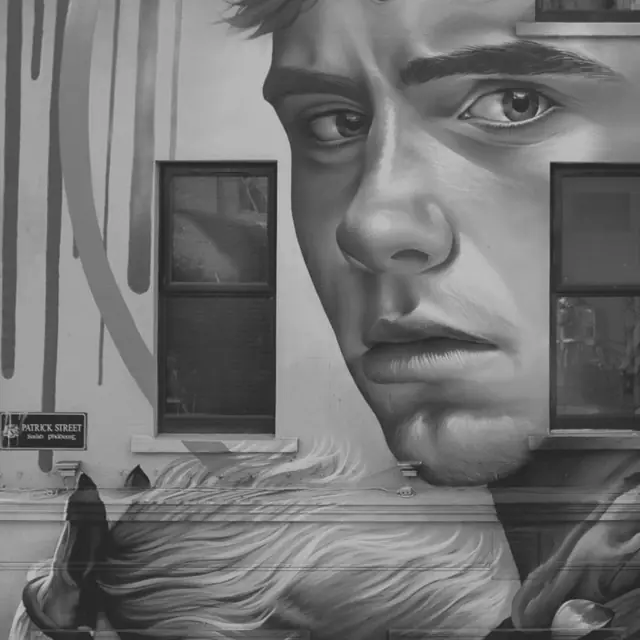


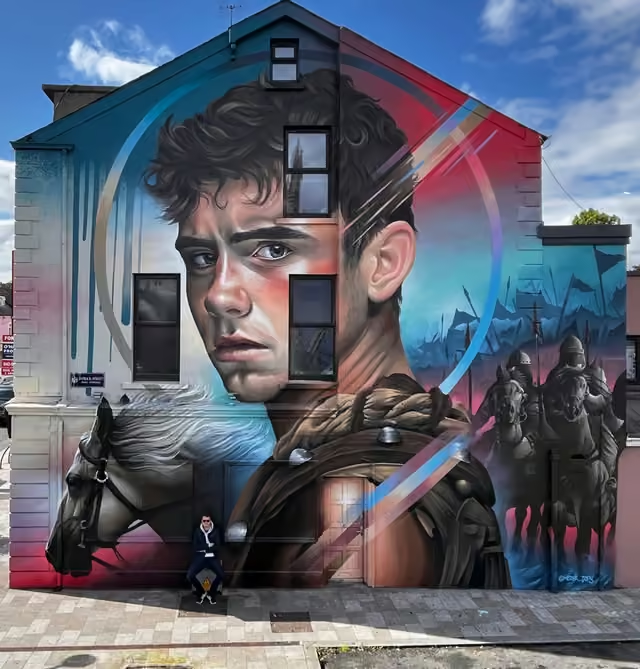
How Setanta became the Hound of Culann.

Image source & credit · Resized for display.
Setanta and Cúchulainn are the same legendary figure at different moments in his life. In the childhood episode preserved in the Táin, the boy kills the smith Culann’s guard dog and offers to protect the household until a replacement is raised. His new name commemorates that promise.
The Táin Bó Cúailnge, or Cattle Raid of Cooley, later sets him against the forces of Queen Medb. These are literary and mythological traditions associated with the Cooley landscape, not biographies of an independently documented warrior. The festival’s different portraits let you follow the young Setanta and the later hero through several artists’ eyes.
The full story of Cúchulainn“Modern Mythology” is my recent series of artworks, where I focus on ancient tales of Gods and Goddesses
Read the childhood deeds and the killing of the smith’s hound in the scholarly translation.
Learn moreLearn more about the subject 1
- Táin Bó Cúalnge, Recension I · translated by Cecile O’Rahilly University College Cork · CELT / Dublin Institute for Advanced Studies
Historical context and editorial interpretation are distinguished above. Sources researched October 2026.
The story across the years.
Other artists’ interpretations of this subject in the festival collection.
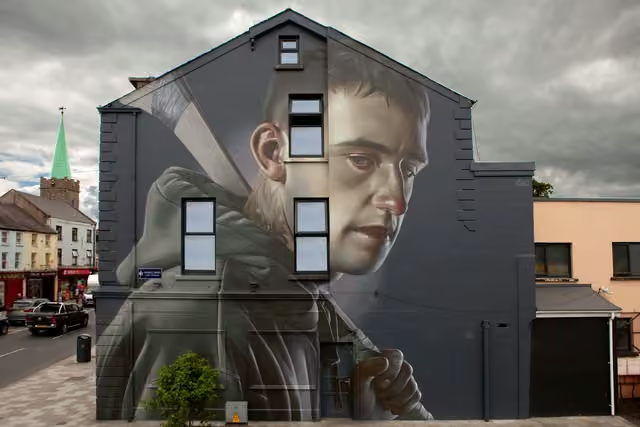 2022 → 2024Cúchulainn (2022-2024)Smug · Replaced
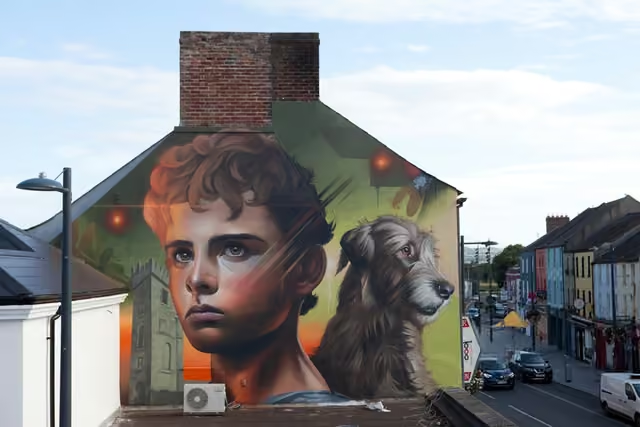 2023SetantaMister Copy · On the streets
The story behind the wall.
In the folklore of many countries can be found tales of young heroes, who lose their lives while in their prime, yet achieve undying fame. The Greeks have Achilles and Hercules, and among Gaelic heroes none can compare with Cúchulainn, The Hound of Ulster. He is noted in Irish mythical sagas for his superhuman strength and amazing deeds on the battlefield. His story was originally passed down by word of mouth, until it was written down more than 800 years ago in the ‘Táin Bó Cuailnge’.
Cúchulainn was not always his name; legend has it that he was born ‘Setanta’ near Dundalk in Co. Louth, at a place called Castletown Motte, better known nowadays as Cúchulainn’s Castle. Cúchulainn’s uncle, King Conor Mac Nessa was ruler of Ulster and had a castle at Eamain Maca. He heard many stories of Conor’s warriors, the Red Branch Knights and he longed to join them to learn the skills of war.
One day, when Setanta was about 7 years old, King Conor and all his chieftans were invited to a feast in the house of Culann, the smith and armourer, who forged the finest of weapons for the king and his Red Branch Knights. On their way to Eamain Macha they stopped to watch a hurling game where Setanta was playing alone against 12 other boys; Conor was so impressed by the skills shown by Setanta that he invited him to join them at the feast at Culann’s place. Setanta chose to follow along later as he wished to finish the game.
After King Conor and his party had entered Culann’s fort he ordered that the drawbridge be raised and the gate shut. and he set loose the fiercest of all his hounds to guard the property.
Meanwhile, Setanta ended his game and he headed for Culann’s fort. As he approached he was confronted by a ferocious hound bounding towards him, its mouth gaping wide; with only a hurley and sliotar (ball) to protect himself and a split second to react, Setanta hit the sliotar down the hound’s throat and wrestled him to the ground.
On hearing the commotion, Conor, Culann and all at the feast came rushing out fearing the worst as they remembered that Setanta was due to arrive; they found him unharmed with the hound dead at his feet. Culann was relieved that Setanta was safe but asked “who will protect my family and fort now?” Setanta stepped forward and said “I will be your guard” and on hearing this Culann accepted and declared that Setanta would from then on be called ‘Cúchulainn’ (Hound of Culainn)
Meet Mister Copy.
View artist profile & all their workBorn and raised in the vibrant and diverse city of Johannesburg, South Africa. I have always been attracted to the idea of color and art. I began at a young age. Falling in love with the art form of graffiti, I started spray painting illegally on the streets. Avoiding the Law and the dangers of graffiti, I slowly gravitated towards portrait murals. Now based in Paris, France, I mainly focus on photorealism, but still keep close to my love for traditional graffiti, incorporating splashes of colour, drips and graffiti tags merged into my murals. You may identify my style with 45 degree lines cutting through my artworks with differnt opacity levels.
“Modern Mythology” is my recent series of artworks, where I focus on ancient tales of Gods and Goddesses from different cultures around the world, only to add my own modern day twist to it by displaying these prolific figures in a way that people can relate too.“