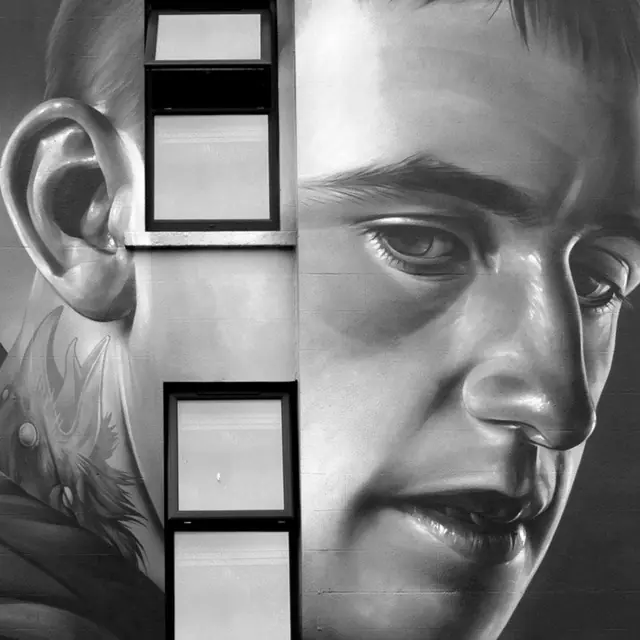


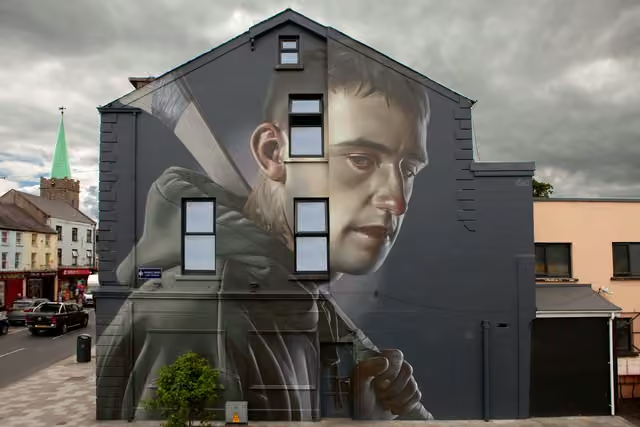
How Setanta became the Hound of Culann.

Image source & credit · Resized for display.
Setanta and Cúchulainn are the same legendary figure at different moments in his life. In the childhood episode preserved in the Táin, the boy kills the smith Culann’s guard dog and offers to protect the household until a replacement is raised. His new name commemorates that promise.
The Táin Bó Cúailnge, or Cattle Raid of Cooley, later sets him against the forces of Queen Medb. These are literary and mythological traditions associated with the Cooley landscape, not biographies of an independently documented warrior. The festival’s different portraits let you follow the young Setanta and the later hero through several artists’ eyes.
The full story of Cúchulainn IN PUBLISHED WORDS / 1976Táin Bó CúailngeTranslated by Cecile O’RahillyRead the childhood deeds and the killing of the smith’s hound in the scholarly translation.
Learn moreLearn more about the subject 1
- Táin Bó Cúalnge, Recension I · translated by Cecile O’Rahilly University College Cork · CELT / Dublin Institute for Advanced Studies
Historical context and editorial interpretation are distinguished above. Sources researched October 2026.
This artwork is preserved in photographs. It is part of the festival’s history and is no longer available as a walking-trail stop.
The story across the years.
Other artists’ interpretations of this subject in the festival collection.
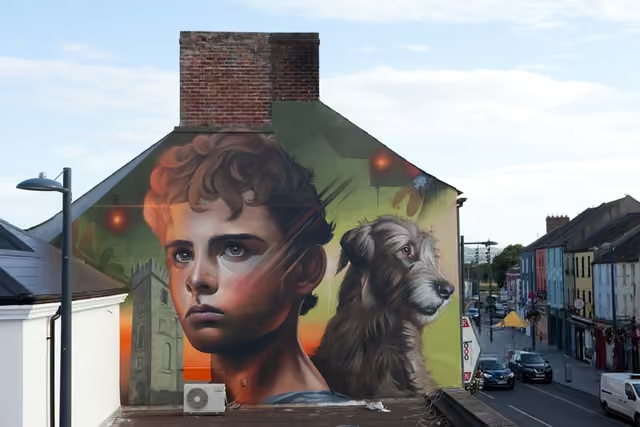 2023SetantaMister Copy · On the streets
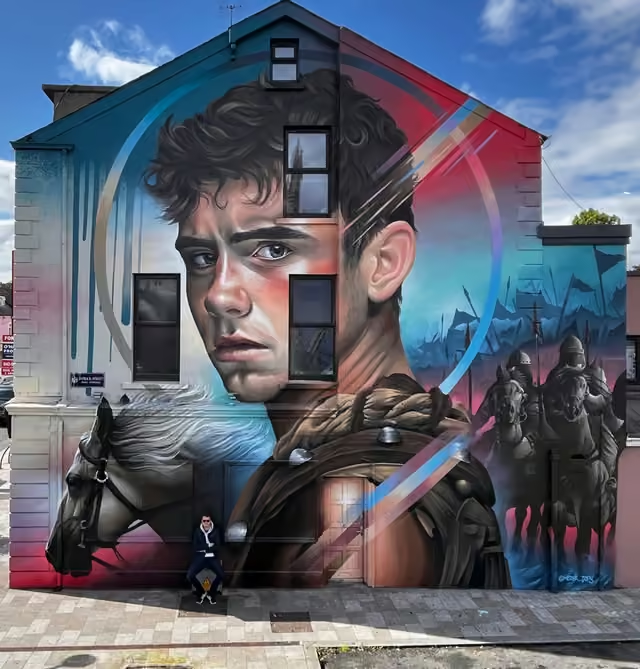 2024CúchulainnMister Copy · On the streets
The story behind the wall.
Cúchulainn is the central figure in the story of the Táin Bó Cúailnge, the Cattle Raid of Cooley – this epic tale is said to have taken place nearly 2,000 years ago!
Born Setanta near the spot where Cúchulainn’s castle now stands, he became known as the great Irish warrior Cúchulainn, when in self-defence and with only a hurl and sliotar in hand, he killed the fierce hound of the King’s favourite sword smith named Chulainn. Setanta vowed to protect his lands and family until a replacement guard dog could be found. He became known as Cúchulainn – the hound of Chulainn, from that day forth.
The Táin is set in rural, tribal and pagan times in Ireland, with fearless warriors, haughty queens and kings, and prize bulls. It is Ireland’s most epic mythological tale, on a par with the Greek Iliad, and at the heart of it, is Dundalk’s favourite son ‘Cúchulainn’.
It recounts how Queen Medb of Connacht becomes envious that her husband, Ailill, owns a prize white bull called Finnbennach, which is better than any in her herds. Learning of the existence of a superior bull, Donn Cúailnge (brown of Cooley), she resolves to steal it from its homeland in the Cooley Peninsula, and so launches a cattle-raid from Roscommon to north County Louth.
Cúchulainn was a gifted and skilled warrior, blessed with superhuman powers. He was a master of spear, sling and hurl, and this enabled him to defeat the best warriors that Medb could muster. Many great fights and battles took place in the surrounding areas of Dundalk in defence of the Brown Bull of Cooley from the queen’s marauding armies.
He famously fought and killed his foster brother Ferdia in Ardee, who had been put under a spell by Queen Medb, and battled against her armies in Faughart, north of Dundalk. After bravely defending the honour of Ulster Cúchulainn eventually met his end at The Standing Stone at Rahiddy near Knockbridge, which can still be seen today. Here, mortally wounded, he tied himself upright to the standing stone, sword in hand to face his enemies, like a true warrior.
Even in this weakened state Medb’s warriors were fearful to move closer. It was not until the raven Morrigan landed on his shoulder that they knew he had died, and that it was safe to approach.
This whole area is steeped in the folklore of Cúchulainn. Dundalk’s town crest proudly states ‘Mé do rug Cú Chulainn Cróga, meaning ‘I gave birth to brave Cú Chulainn’. He is the son of Lú ‘God of Light’, who gives his name to the county of Louth.
He is commemorated in August each year at An Poc Fada, the long puc, held on Annaverna mountain, where the finest hurlers in Ireland compete to be crowned all-Ireland champion by completing a 5km course across the mountain hitting a sliother in the shortest number of pucs.
If you would like to explore this story further there are numerous sculptures, artworks and monuments in Dundalk and surrounding areas that depict the heroics of Cúchulainn.
Meet Smug.
View artist profile & all their workSmug is a world renowned Australian artist based in Glasgow, Scotland. He paints in a photorealistic style introducing additional light sources giving each large-scale piece real character.
He is renowned for many of his large scale installations all across the globe and has painted “The Tallest Mural In Ireland here in our home town of Dundalk in 2021 standing 41 meters in height