

The story.
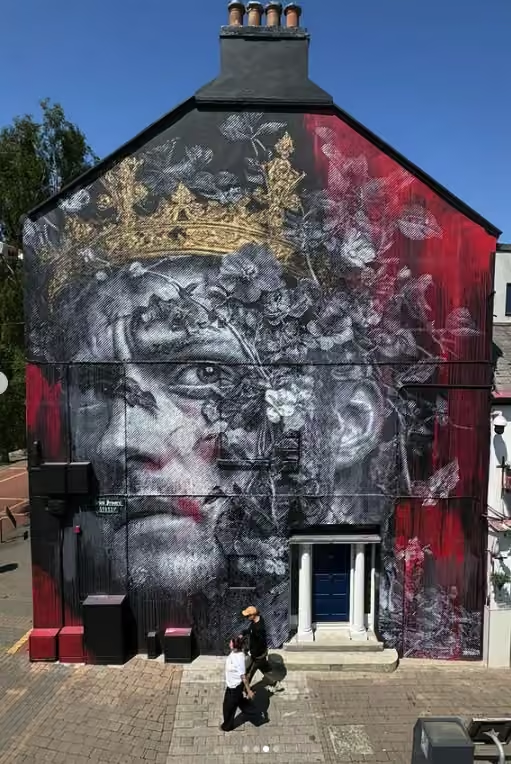
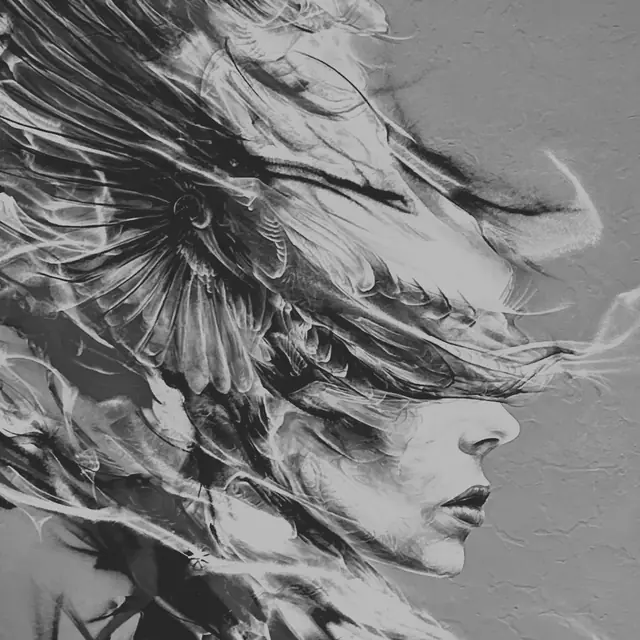
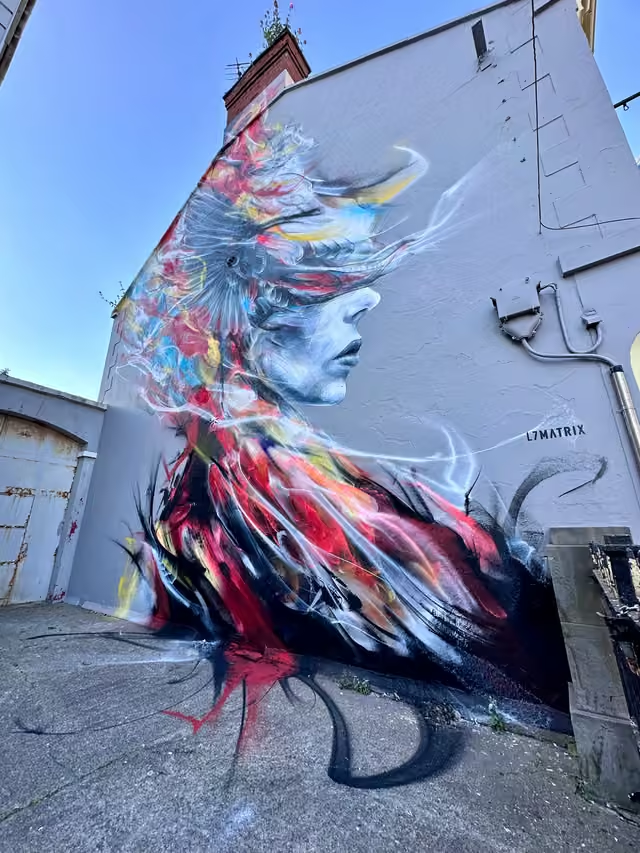
The festival identifies L7matrix’s figure as the Morrígan and describes her transformation into a crow. Within its interpretation, the bird connects warfare, prophecy and Cúchulainn’s fate. The loose feathers and shifting forms give the wall a sense of a body becoming something else.
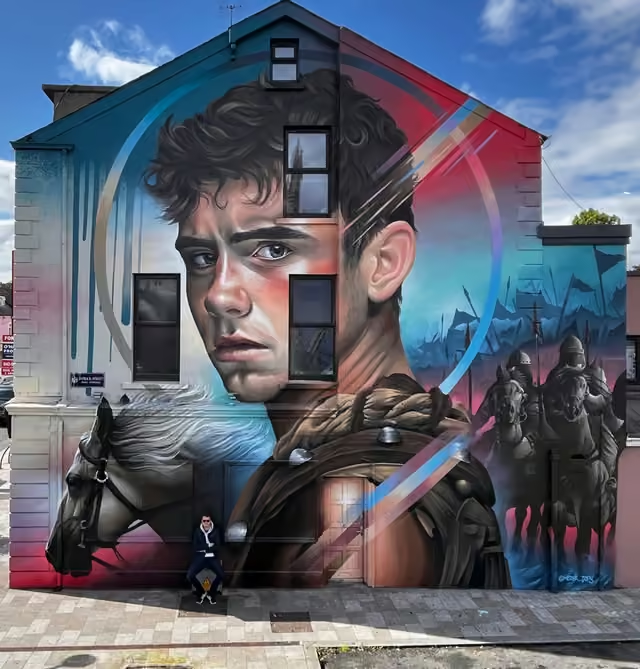
This is an artistic reading of a mythological figure, rather than a single fixed portrait or a historical event. Read it alongside the Cúchulainn murals to see how the festival returns to connected characters while allowing each artist a distinct visual language.
The Celtic goddess Morrigan, known for her association with war and death, is depicted in this mural as she shapeshifts and transform into the Crow (Badh).
She is mainly associated with war and fate, especially with foretelling doom, death, or victory in battle. She often appears as a Crow, the ‘Badh’ in this role. She incites warriors to battle and can help bring about victory over their enemies. The Morrigan encourages warriors to do brave deeds, strikes fear into their enemies, and is portrayed washing the bloodstained clothes of those fated to die. The Morrigan is often described as a trio of individuals, all sisters called the three Morrígna. She is also associated with the Banshee of later folklore. In one version of Cúchulainn’s death tale as Cúchulainn rides to meet his enemies, he encounters the Morrígan as a hag washing his bloody armour in a ford, an omen of his death. Later in the story, mortally wounded, Cúchulainn ties himself to the standing stone at Rathiddy, Knockbridge with his own entrails so he can die upright, and it is only when the “Crow Morrigan” lands on his shoulder that his enemies believe he is dead.
Learn more