

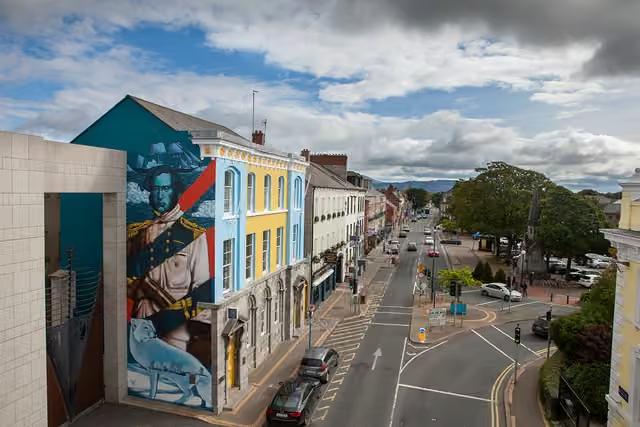
The story.
McClintock’s Fox expedition returned in 1859 with evidence about the fate of Franklin’s missing expedition. This included a written record found by Lieutenant William Hobson on King William Island, physical remains and information gathered from Inuit people. McClintock’s published voyage narrative made the findings widely known.
The distinction matters: the expedition did not discover the wrecks of Erebus and Terror in 1859, as the older festival copy suggested. The revised account here follows the Dictionary of Irish Biography. It also corrects the knighthood to 1860, during Queen Victoria’s reign.
Francis Leopold McClintock was born at 1 Seatown Place, Dundalk, in 1819. He joined the Royal Navy in 1831 and became an Arctic explorer known for his skill in long-distance sledge travel.
Lady Franklin commissioned the Fox expedition to investigate the disappearance of her husband’s ships. In 1859 McClintock and his colleagues brought back documentary and physical evidence of the expedition’s fate, alongside information obtained from Inuit people. Lieutenant William Hobson found the crucial written record on King William Island.
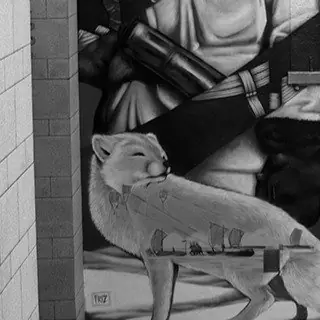
McClintock published The Voyage of the “Fox” in the Arctic Seas in 1859. He was knighted in 1860 and died in London in 1907. Friz’s animal portrait links the Fox and McClintock’s story with his Dundalk birthplace.
Learn more